Fatal Frame II: Crimson Butterfly Remake - Review
Fatal Frame 2 is the next entry in the Fatal Frame series to receive some love, and the first of the three re-visits to receive a complete remake. Enhanced visuals, a redesign of Minakami Village to keep it feeling spooky and changes to the combat system and the camera obscura itself. Fatal Frame 2: The Crimson Butterfly Remake aims to try and bring more players into this photographic horror experience.

Fatal Frame 2 is one of, if not the most, beloved entries into the Fatal Frame series. Following the continuously bizarre release of order of these games, we have skipped right over Fatal Frame 3 and gone back to 2. Having started at 5, then 4. In the lead up to this I didn’t think to fact check my memory at all and thought that Fatal Frame 2 was the one I remembered from my childhood and was super excited. Within ten minutes, I realised I had not in fact ever played the original Fatal Frame 2, and it was Fatal Frame 1 that had filled my young days with photographic dread and horror.
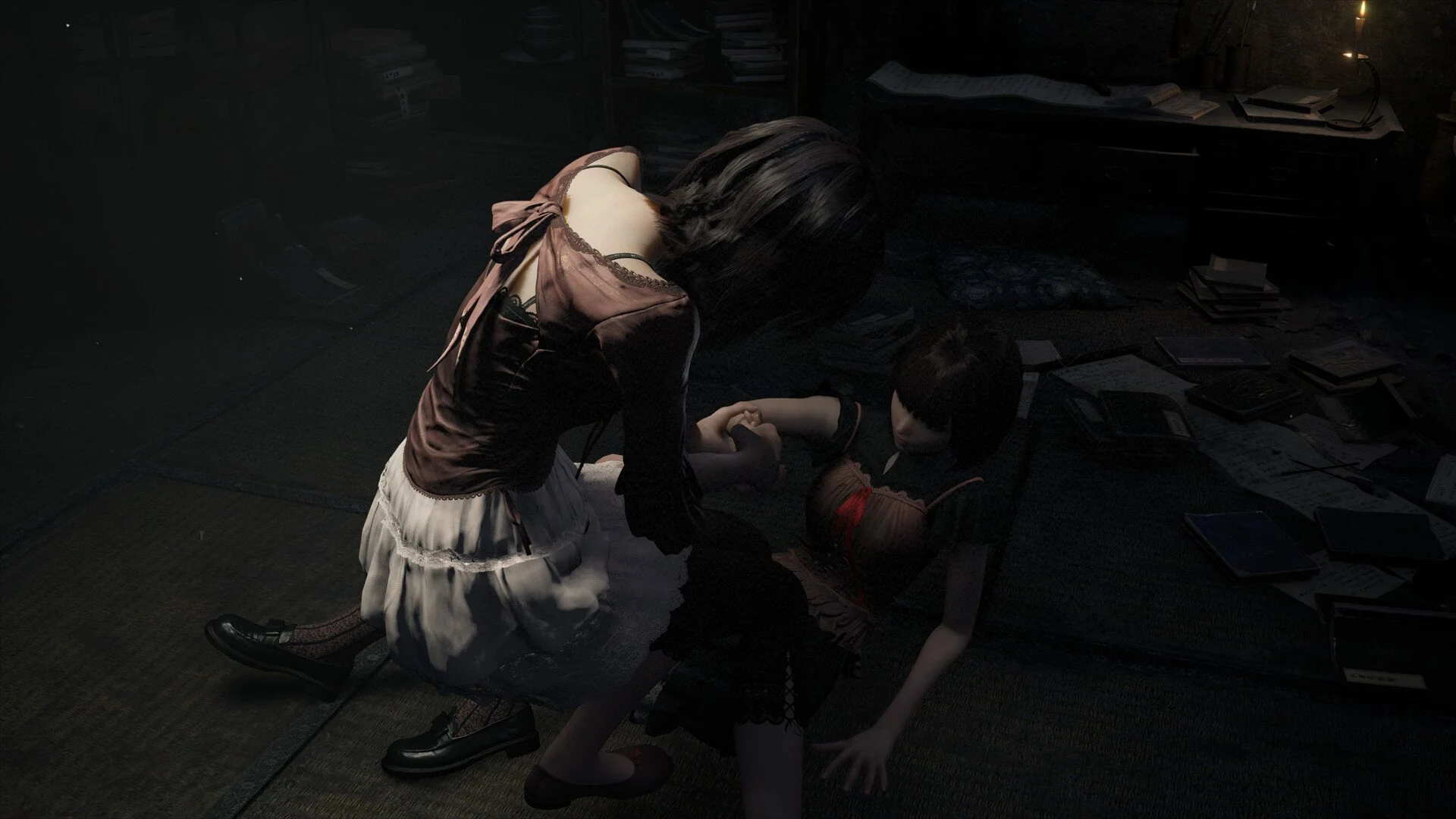
That said, I am fan of these games and did not let this hamper my experience in the slightest. Fatal Frame 2 remake has done its damnedest to build upon what we already had and flesh it out for new players. The thing you’ll notice the earliest is the combat system, and the few changes put in place here. The game now features a dodge button, which means instead of awkwardly attempting to walk away from an enemy with your camera up, but no film loaded, you can dodge away and start running from the spooky wraiths.
This feels like a nice little addition but the way the game plays out as a result feels a little bizarre as a result. I never found myself much wanting to use the dodge ability, and the few mechanics built around this were more frustrating than rewarding for effort put in. Occasionally the enemies will do ‘Leering attacks’ which basically gives you a full screen jumpscare that does big damage to your willpower gauge. The only way to avoid these attacks is to break eye contact, by dodging away or hiding behind something. I don’t think there was ever a combat sequence in which there was an actual way to hide, and due to the absolute insane amount of film grain on the screen at all times, I don’t think I ever actually saw a visual indicator that gave me any forewarning that the ghost was about to do one of these attacks.
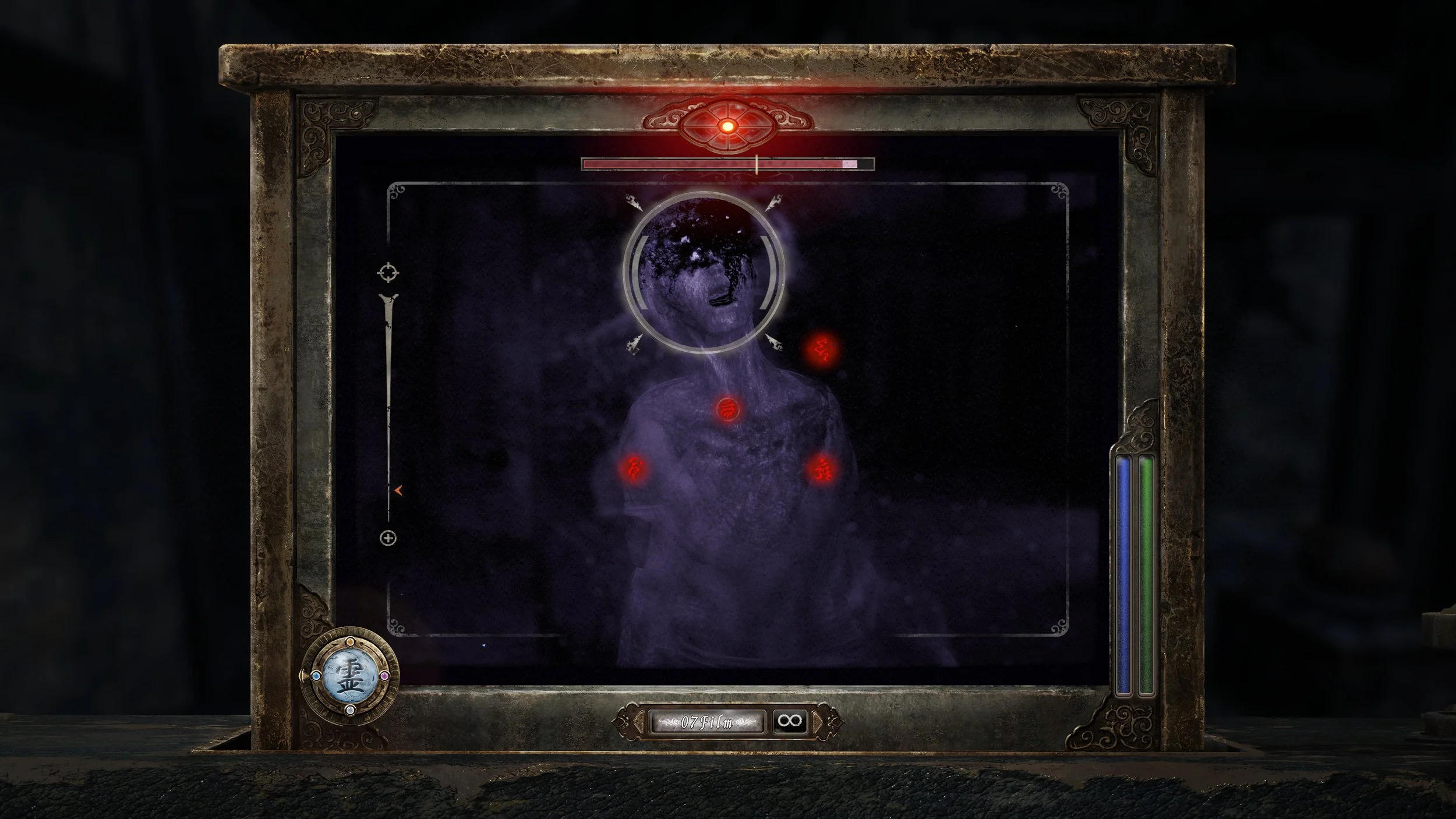
It isn’t egregious, but it does make for some combat encounters against mini-boss and boss type enemies feel overbearing and somewhat unfair at times. A better warning/visual indicator would have gone a long way here, especially when so many fights feel like they take a long time to get through due to enemies seemingly being photograph sponges. This may be a problem of attempting to play the game like a more traditional Fatal Frame entry, but it made what should have been tense and scary encounters, more frustrating than anything else.
There are two other major changes to how combat is done in Fatal Frame 2 remake, that being with the addition of different Filters for the camera, and the Willpower gauge which acts as a separate resource and survivability mechanic to the normal health bar. The Willpower bar is what will take the biggest hits of damage throughout encounters. When it is fully depleted and you get hit, you’ll be knocked down. When knocked down most of the Wraiths will leap on you and start strangling the life out of Mio, quickly depleting her health until you get an up-close picture of their surprisingly detailed faces. Willpower also acts as a power resource, allowing you to use special shots with the different filters to an array of outcomes. Be it knocking a wraith back, slowing them down or doing massive damage.
The filters are probably the part I enjoyed the most because of how they blend into the entire gameplay experience. As you progress through Minakami Village, you’ll encounter Makabe’s ghost, a folklorist who brought the Camera Obscura to the village itself. In your encounters with his ghost, he will drop these different filters that will allow you interact with the environment in different ways, as well as change the range of your Camera Obscura, how quickly it reloads and the damage it deals. One filter will allow you to see traces of a character, and act as a guide to the next story section. The exposure filter will allow you to make things appear in the world, when you take a photo that matches another in specific locations. The final filter is the wraith repelling king and can unseal blood rituals allowing you open a plethora of locked doors and furniture for shortcuts and rewards. The filters are crucial for the new progression of the story, and the exploration of Minakami village and the various houses within.
One final addition is the focus and zoom features. With the low, low cost of 2 prayer beads, you’ll be able to unlock manual zoom and focus for the camera. Which in theory is a fun little idea, and the game really tries to push this idea of getting a close-up long range shot of a ghost, with perfect focus for a massive hit of damage. This almost never actually is possible though. The manual focus feels more problematic in the midst of battle than helpful and feels more like a barrier to getting to maximum auto focus speed. A fun idea but horrifically implemented.
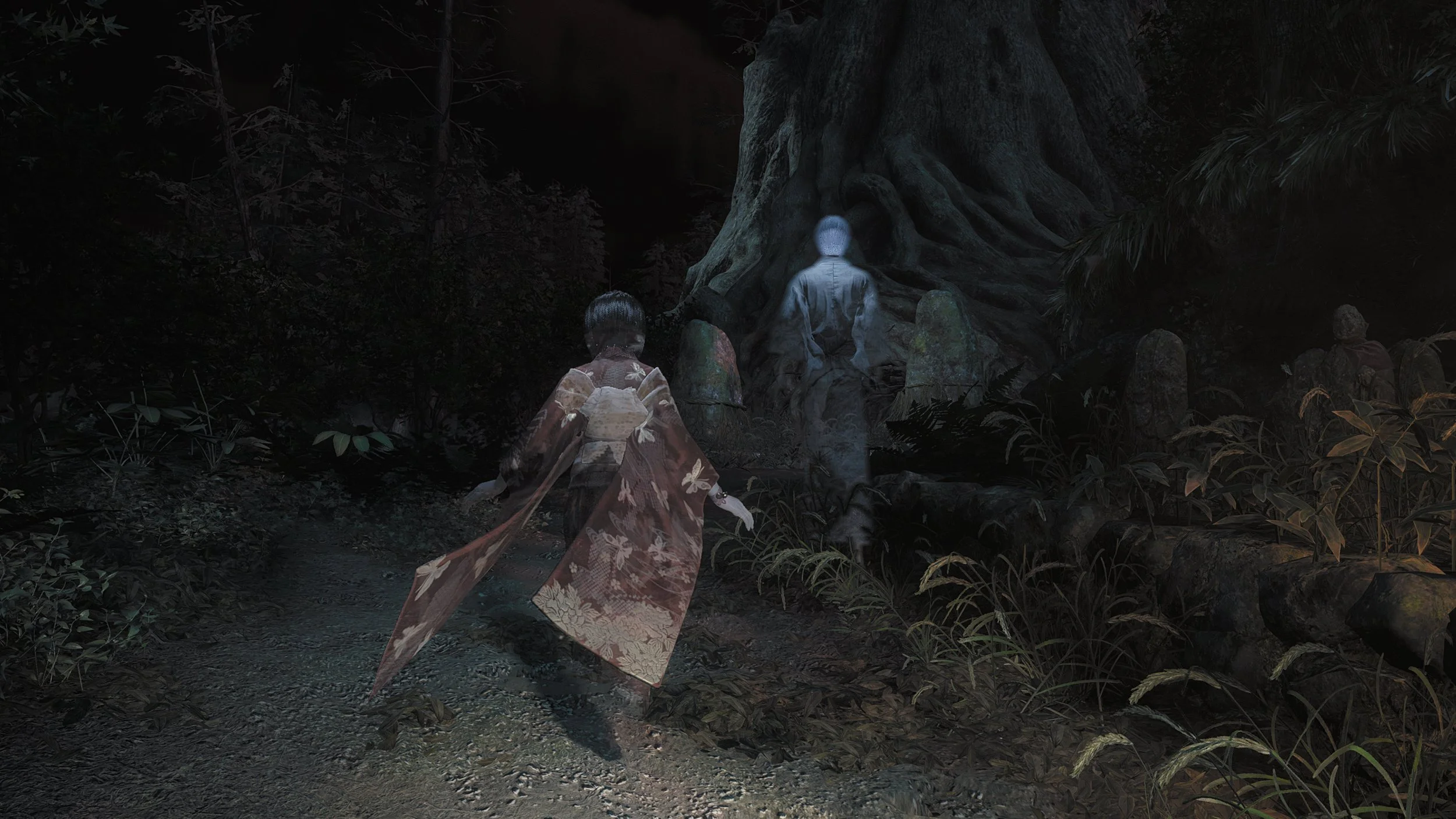
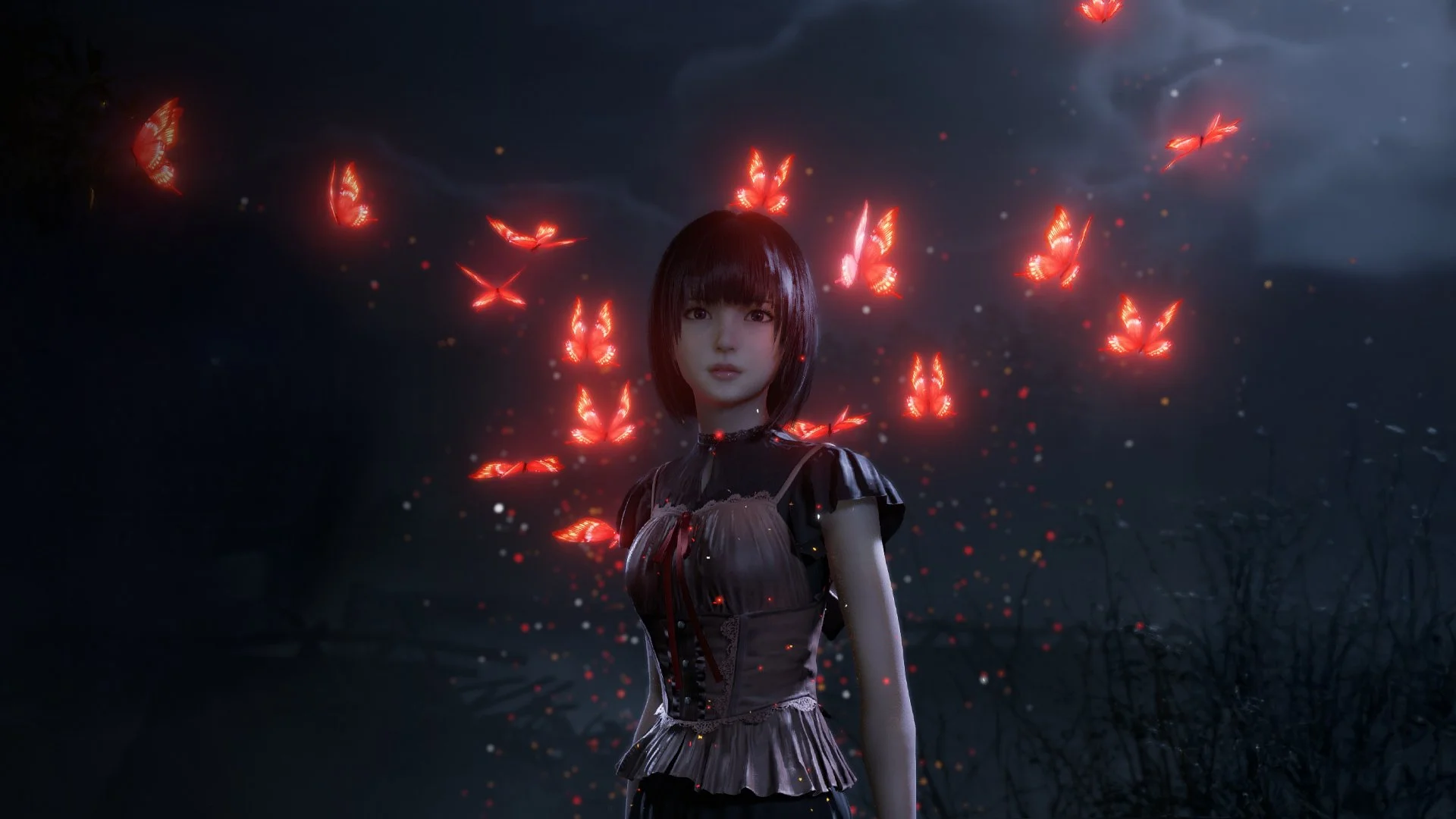
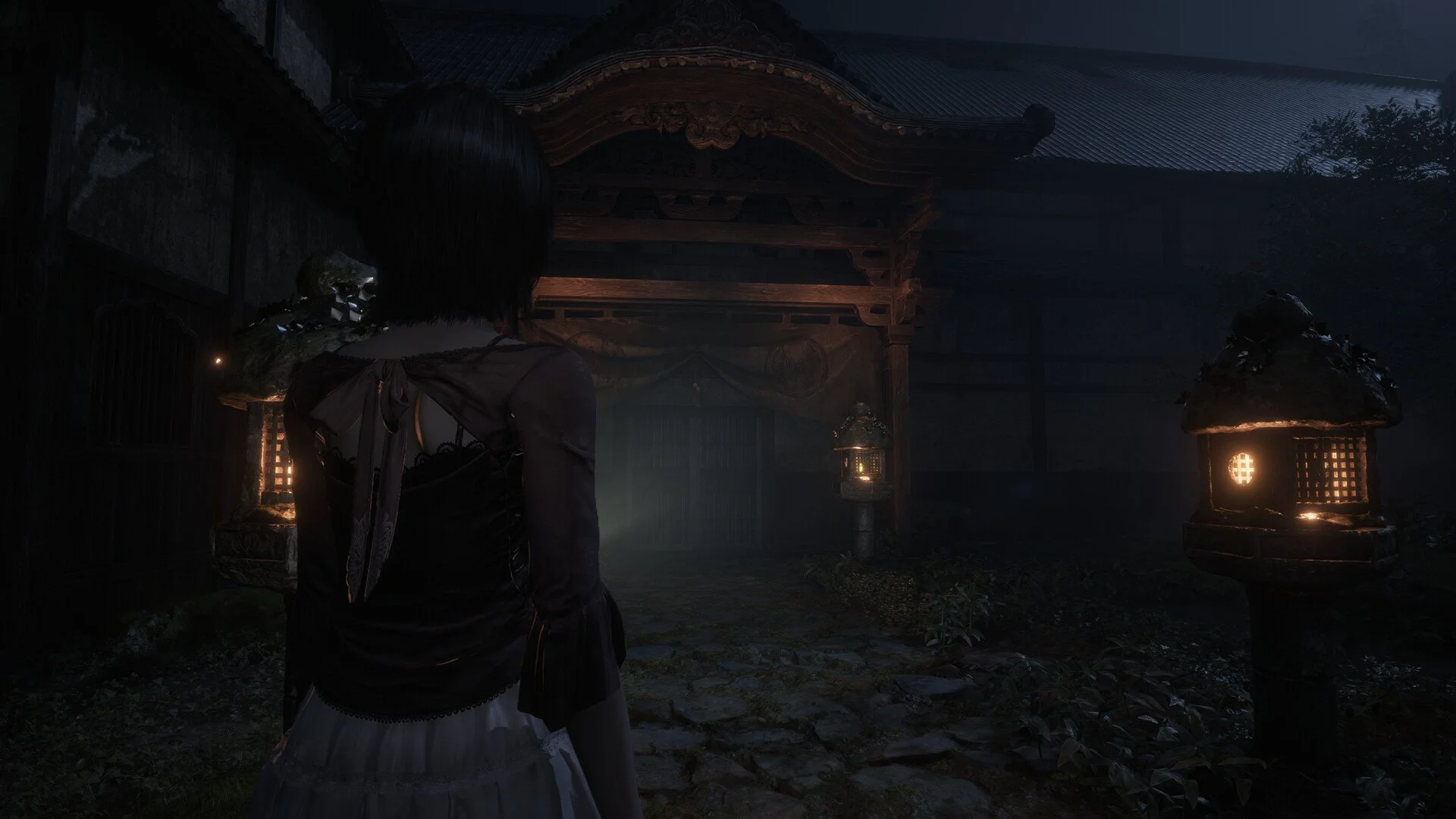
The remake is incredibly pretty of a game. Definitely a step up in the visuals department after the remasters which were definitely nicer looking but not a complete change. Every ghost has had their designs reworked to represent the agony and reason for their deaths, with them being varied and unique for the most part, and incredibly disconcerting to look at. The film grain filter to the screen makes a return here too, which on its own would be fine.
However, the film grain is offensively blinding for a majority of the game. The world blurs almost like a migraine aura constantly; the camera movement feels like motion blur has been amplified to the maximum limit and looking any distance further than Mio’s nose results in a static heavy environment that betrays how beautiful this game actually is. In the in-game rendered cutscenes the light film grain is present but does not distract from what is happening on the screen. There are chase sequences with the Kusabi that are almost impossible to navigate without brightness jacked right up because of how violent the static and film grain becomes and how fuzzy everything ends up looking. This is by far the most egregious use of this filter I’ve ever seen and makes what is a genuinely enjoyable experience, in what should be an eerie but hauntingly beautiful little village one that you spend half the time wondering if you’ve got a migraine coming on.
This becomes even more frustrating when you unlock the cleaner lens ability on the Camera Obscura, and you can see the world far more clearly through the camera than you can without it. If the sound design wasn’t so good at directing you and leading you to the right locations while alerting you to environmental factors and enemy ghosts, the game could almost border on being unapproachable. Which for the entry that is seeking to be more approachable for new players, seems a weird tandem of failed logic. The film grain needs to be reduced in the sheer noise of it, and it should be possible to actually move without the whole world looking like it is stuck in perpetual extreme motion blur. Hopefully something that will be fixed in a very, very early patch.
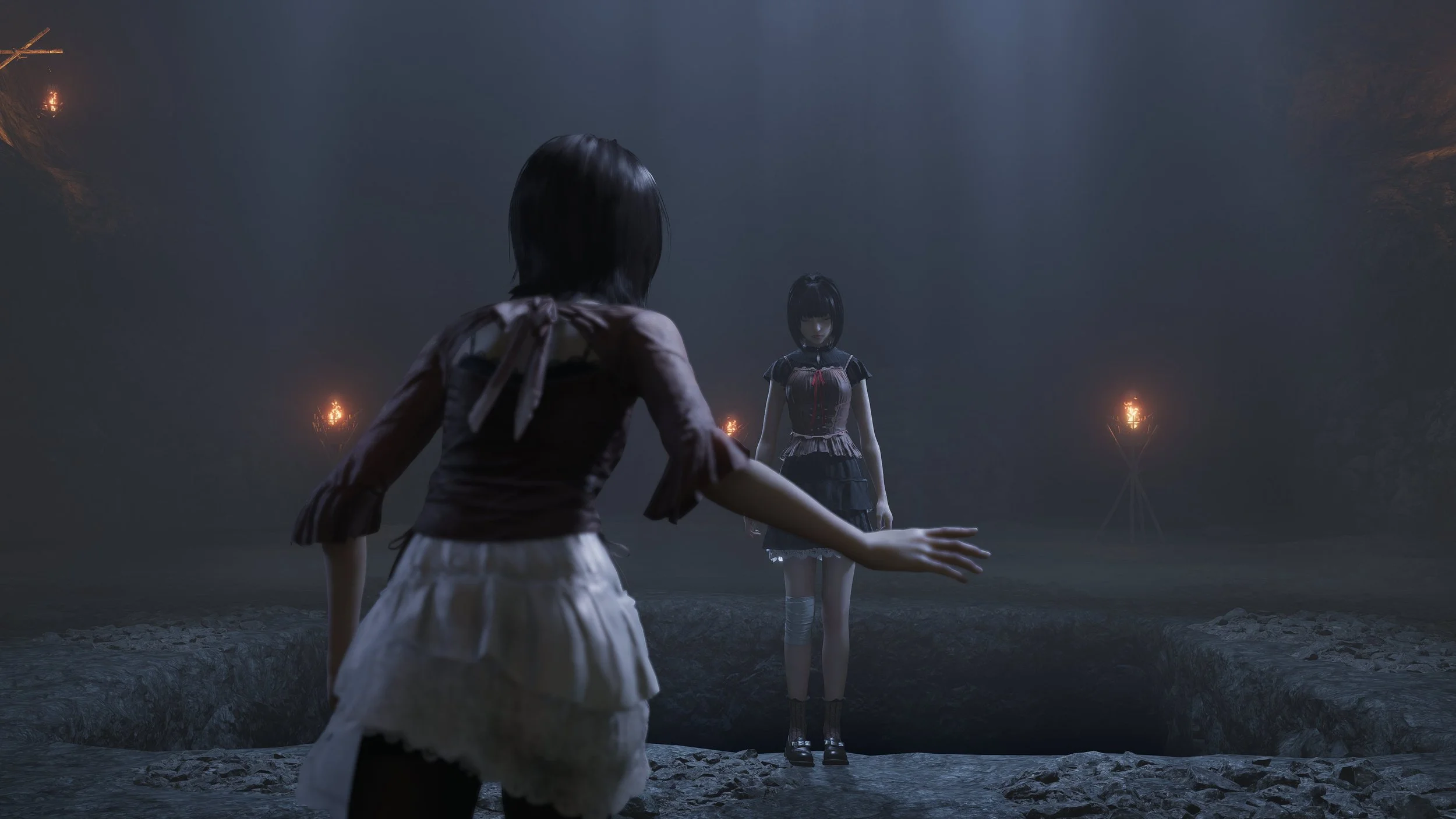
Fatal Frame 2: Crimson Butterfly Remake is a great game. It is a strange Fatal Frame entry, leaning a little too into the combat side of things, that forsakes your ability to actually see the rest of the game that there is a clear labour of love involved in making look gorgeous. The ghosts are as horrifying as ever, the story feels familiar, as is the case for all Fatal Frame games. Yet it may be told the best out of the lot, and even without the nostalgia that I was expecting, I found myself wanting to get through it, to see where it all ends. For returning players, they will be excited to know that there is a brand-new ending that has been added to the game, achievable on a second playthrough on a brand-new difficulty. There is a lot done right here, with a few major glaring issues that stop Fatal Frame 2 from being the perfect remake.
The Score
8.5
Review code provided by Koei Tecmo
The Pros
All the ghost designs are really interesting and thought out
The use of the filters as both an exploration and combat mechanic is done really well
Minakami Village is truly terrifying to explore
The Cons
The film grain and noise is excessive to the point of almost blinding
Enemies are incredibly tanky, making every fight take just a touch too long
Focus and Zoom are really badly implemented features