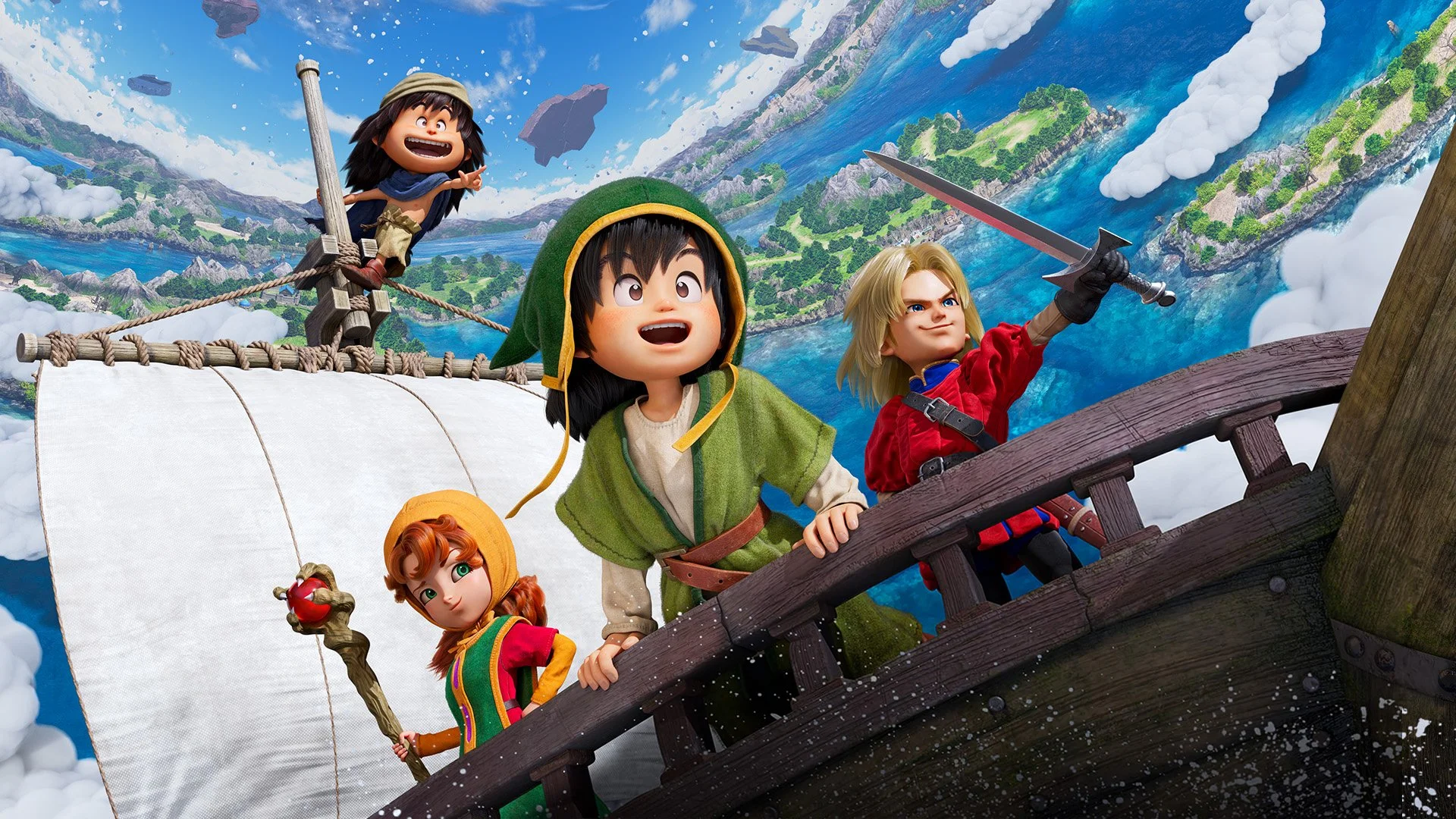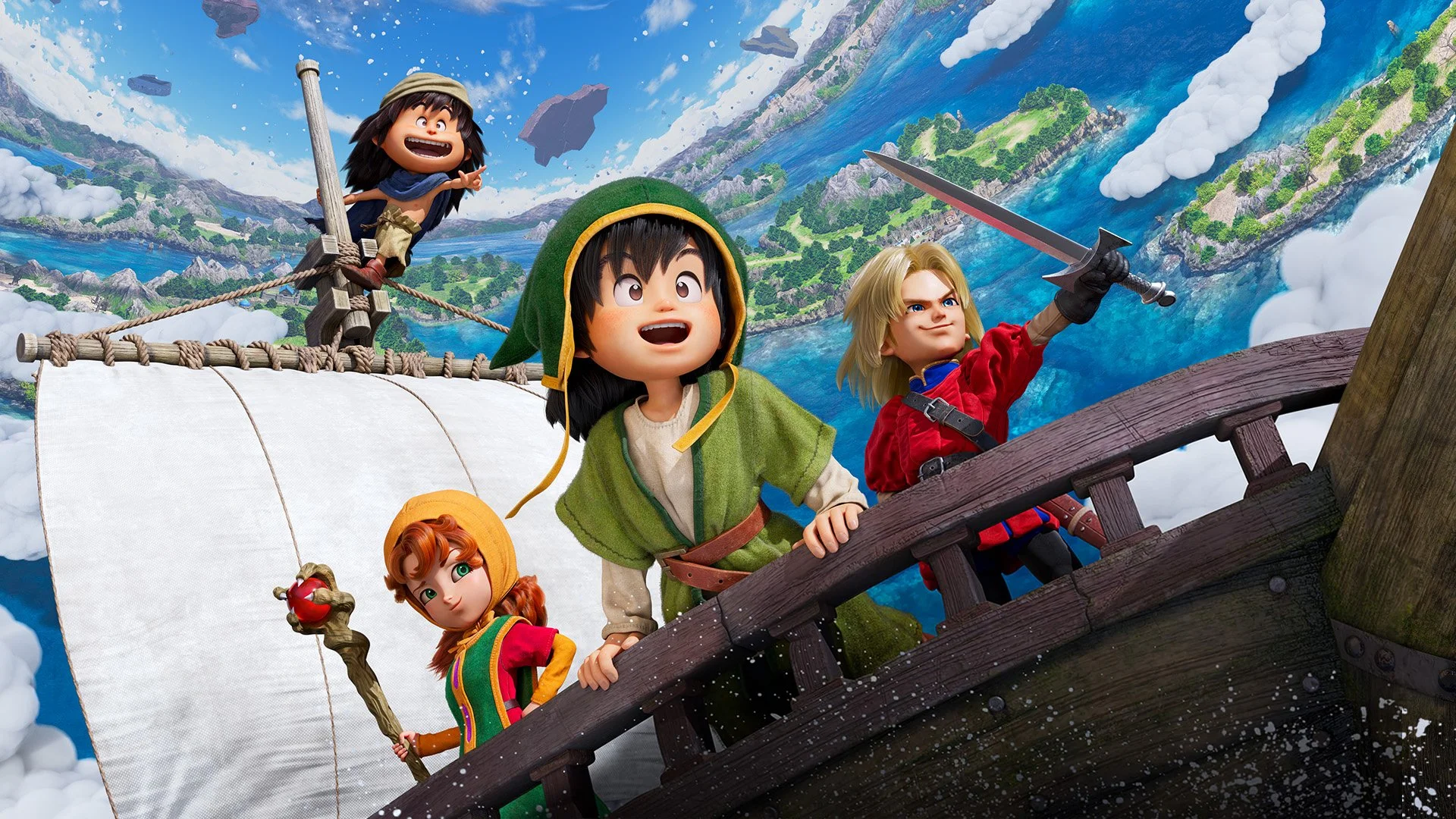
Dragon Quest VII Reimagined - Review
Dragon Quest was never a series I really played growing up, I did not play a lot of JRPGs, but when I did it was usually Final Fantasy. My first real exposure to the series was actually selling the DS games years ago, which was after VII, so jumping in here was all-new for me. Does a reimagining of a game first created for us back in 2001 stand up on its own in today’s modern gaming landscape, or is it nothing more than a figment of imagination?
The game starts out with your character, along with Prince Keifer, doing something in secret from the rest of the residents of Estard Island. The secret is that they are repairing a ship, in the hopes of leaving the island behind and finding out new places in the world. This is due to Estard Island being the only island in the world and it has been that way for the longest time. While attempting to find more information on how to repair the ship, Keifer discovers a tablet piece and an old book, which provide some insight onto a place forbidden to all who dwell on the island. Of course, both Keifer and the player character love exploring, so they ignore that and gain entry, with Maribel following along in secret. Together the three of them find themselves transported to a new island and quickly discover it is in the past and upon their return to the present, that island is now in the world.
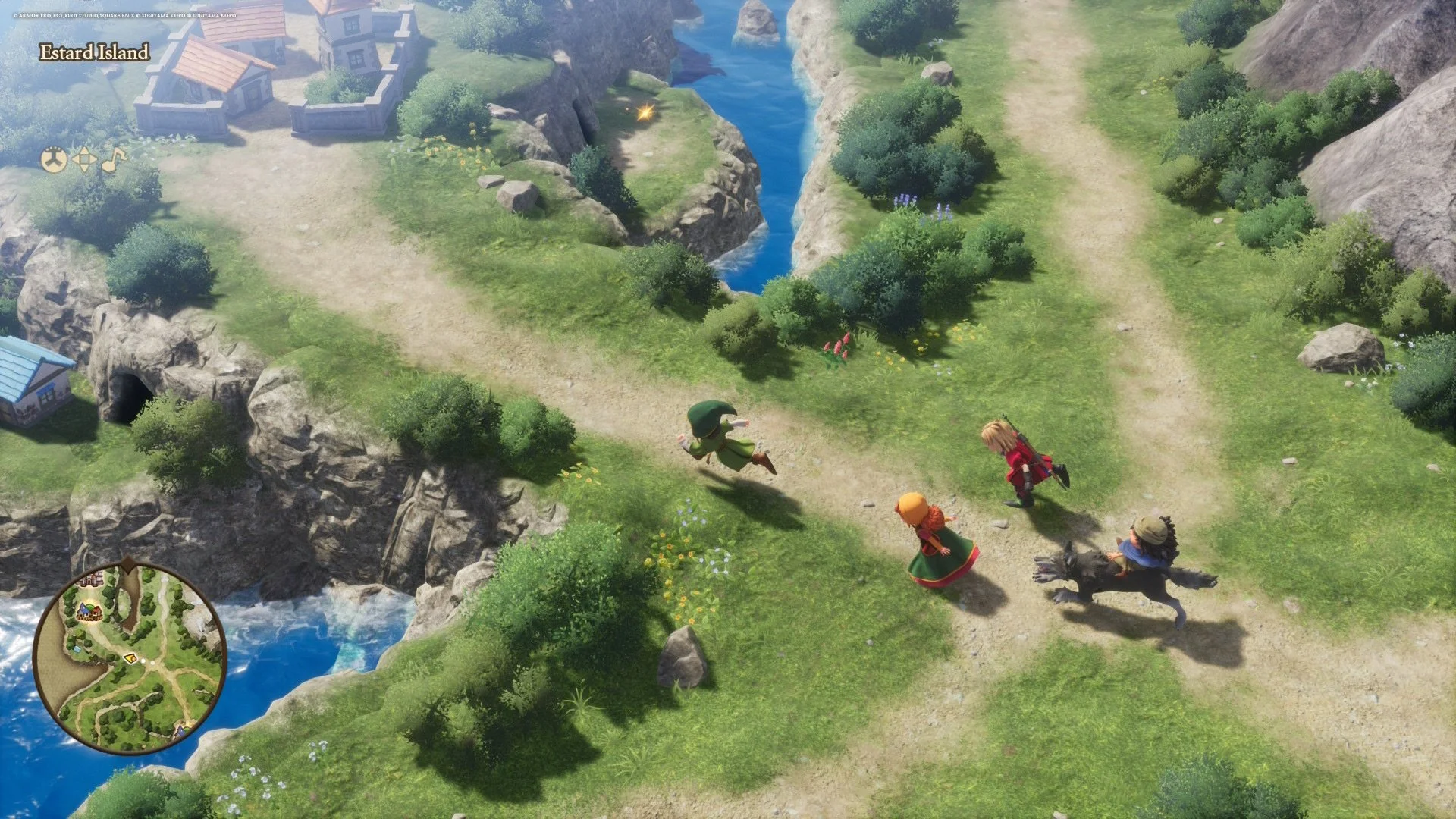
They soon realise that by solving major issues in the past, they can restore the islands to the modern day and quickly make the decision to do just that. The only catch is that each portal requires a series of tablet fragments, in order to be unlocked and these can be almost anywhere. Each location has new characters to meet and new dangers to face and over time, more of the modern world becomes explorable as well. Sometimes events that happen in the past, will have a direct impact on the modern-day world, and sometimes they don’t. As you journey across time, you will also recruit new characters to join your quest in Aishe, Ruff and Mervyn. What makes the story fun is that each time you venture to a new island, you have to discover what is going on and then work with a few folks from there to solve the problem.
What doesn’t work for the story is that it is all that you do. You never get to go to an island that has nothing wrong, just is a nice place, there is always something wrong. This makes things quite repetitive and I know, some folks will say that is how it was in the original version. If this was a straight remake, then sure I would understand keeping things the same, but this is the Reimagined release, so that means there should be more modern touches and there really isn’t. Don’t get me wrong, I did some comparisons to the 3DS release of the game and there are some changes, not massive ones, but slight improvements, so it is not 1:1, but if you know the story there may not be any surprises for you.
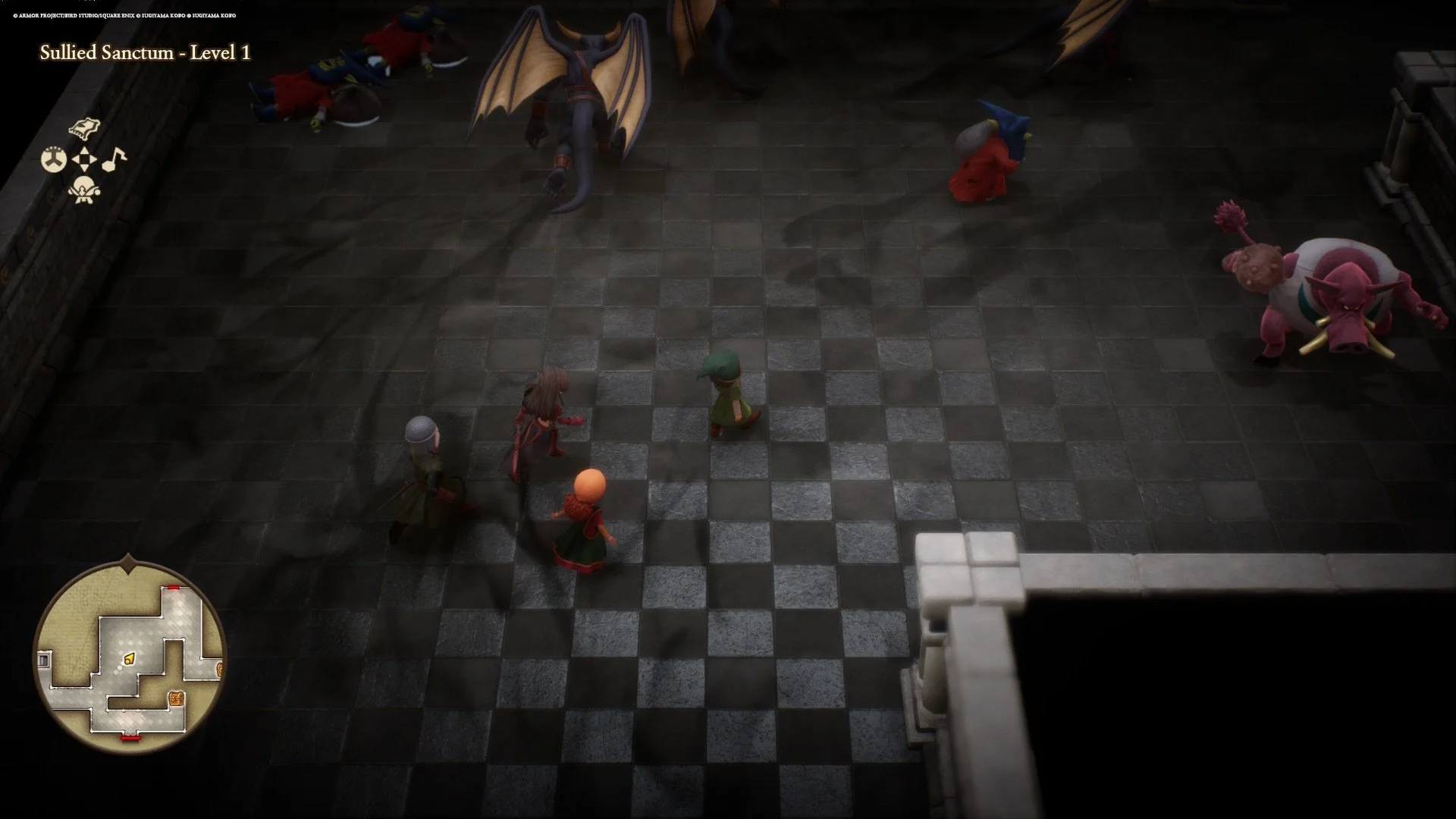
Where things feel a little different is in combat, as there are a number of changes here to make things play more modern, but don’t expect anything drastically different to the core experience. The few new additions are battle speed and auto-battle, which as the names should make clear, one increases the speed of battles and the other lets the game battle for you. I will freely admit that after the first 10 hours or so, I sped the battles up, because some fights were over so quickly and when there are fight after fight after fight, it got a bit slow for me. Much like in the 3DS release, you can set tactics for your teammates, so you can set someone to be a healer, as opposed to having to choose to heal each turn. These tactics do make things easier for players, if you spend the time to set them up right, there is no point setting Ruff up as a spell caster, when he is more suited to direct combat.
As you finish off enemies, you will earn both XP for your characters and vocational experience. The former is your basic levelling system, as you increase levels you increase your stats, so more health, more attack and so on. The second is related to the games job system, where you can unlock extra abilities in combat. While you do have one job at the start, after a while you can unlock the ability to have a second job and you can change jobs as well. There are only a handful of jobs to begin with, but as you learn all the skills in one of the jobs, more are unlocked, so you can keep changing as often as you like. The area that really is different for this game is you can tweak the difficulty; you can have the game play as the developers intended, but if you are someone who just wants a simpler experience, you can adjust. This means you can toggle off random monster encounters, increase the damage you do, decrease the damage you take and so on. You can adjust these at anytime as well, so if you find things to hard or easy, you can tweak the settings. Something I did not like about the combat is that almost every encounter feels random, with some enemies doing two or three attacks in a row on you, before you get a chance.
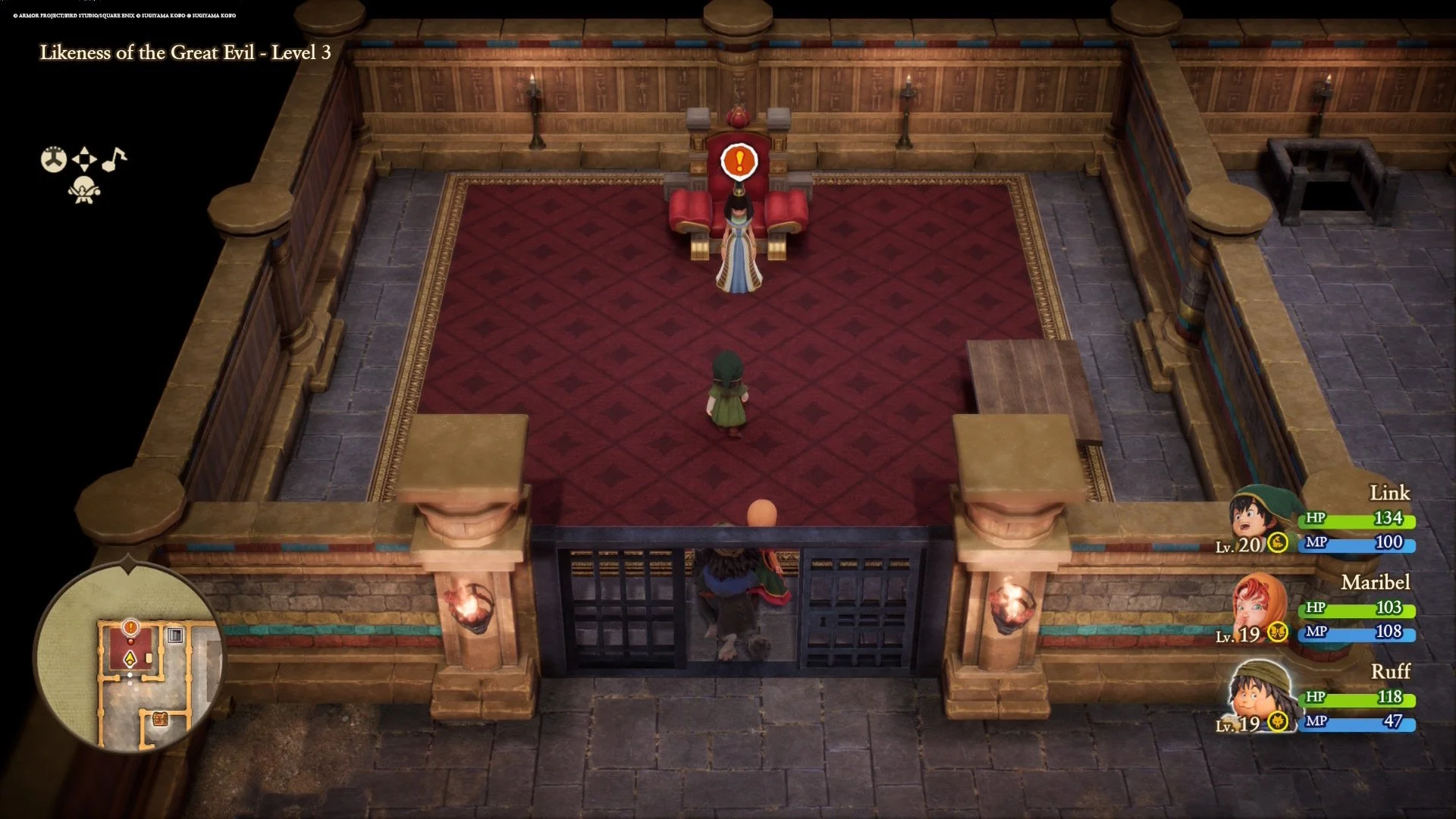
Beyond combat though, there is not a lot else to do. Yes, you sail around the world once islands begin to appear again, or use a magic carpet, but that is really it. A lot of what is on offer is the same as was in the original PlayStation game and the 3DS remake, so if you have played those, things will feel familiar. There are some new additions, like in some dungeons there are puzzles, which require you to stop and think and I liked those. Outside of dungeons you can find a special place and play a game called Lucky Panel, which is a matching game and if you want a real challenge in combat, you can enter a battle arena. While these are nice additions, I would have liked to have seen more, working at the bar making drinks, or given that the player character is the son of a fisherman, a fishing mini-game would have been a perfect addition.
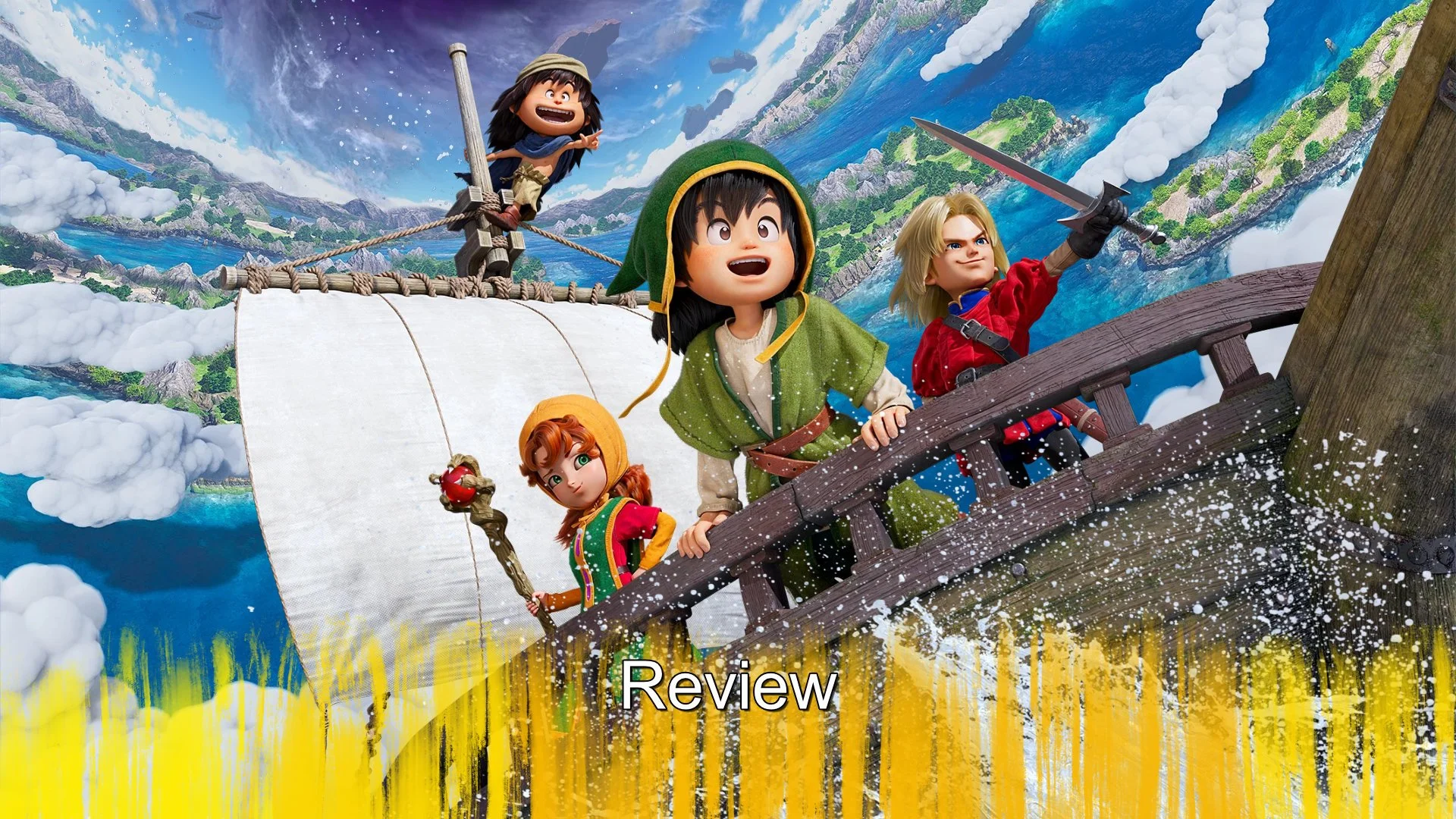
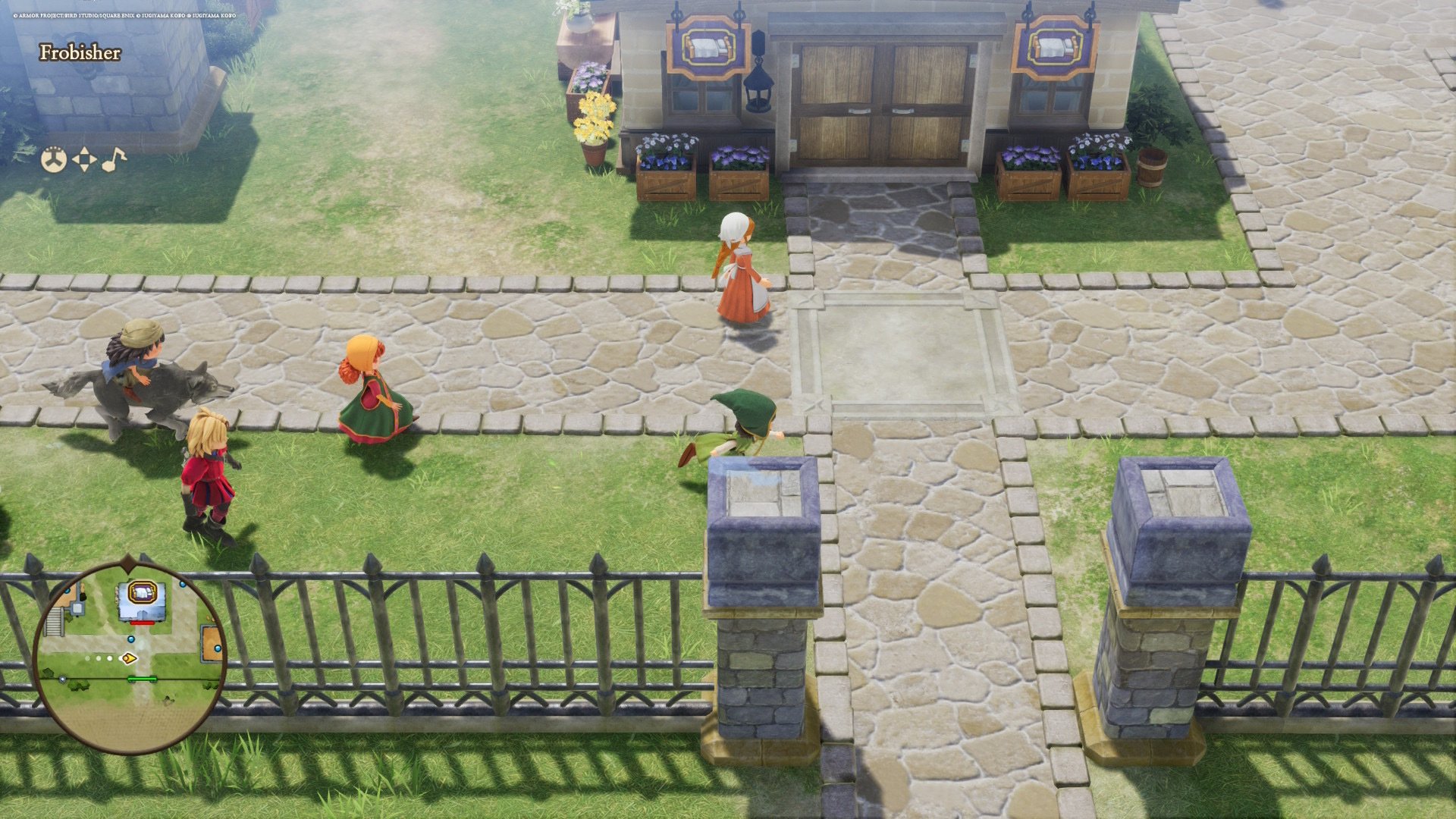
Of course, given that this is a game made for modern platforms, the visuals are going to be easily the thing you notice and for good reason. The game looks so pretty at times, with island and characters all taking that familiar Dragon Quest look and just making it shine on the new platforms. Before I can wax poetic about how stunning the game looks, I do need to point out one massive issue, the lack of customisation. Yes, in the game you can wear new armour for defense, equip a shield or weapon and those give you better stats. In the 3DS release, when you put on a new armour set or robe, your character changed into what they were wearing, here that is not the case. This is a massive downgrade in my eyes, because half of the fun is wearing random gear and then looking silly in serious moments.
Beyond that not working as it should, the rest of the game is fine. The Dragon Quest series has a look and for better or worse they are not changing from it. For major characters, they often have their own unique look, but everyone else is a generic character model. This means you will walk into a room and see two or three of the same looking character, but all being different personality wise. You might encounter one character in one location that is helpful, the same look in another that is not. A lot of these issues could have been reduced if they just had other colours, but nope, they are always the same. This is not the fact for enemies, they do change as the game progresses, and again mostly down to colours, but it is a welcome change. One aspect I really did enjoy was the diorama look that everything had, you notice it more indoors. Honestly, apart from the fact that there is no physical models here, it feels a lot like Fantasian in its visual aesthetic and it suits.
I did notice a few issues with the presentation though, apart from the repeating looks that is. The most common issue is with the shadow detail, there is a finite area around your character, and as you run in any direction, the shadow detail gets drawn in and it is super easy to spot. The other visual issue I spotted was with characters just not having enough animations, they would spin in place to face a new direction, or the screen would fade to black to unload the character, instead of letting them walk away. The lack of animation is just a cop-out and one that should not be present in a modern-day game. The diorama look also highlights the repetitive nature of things, which is a shame, it still looks good though.
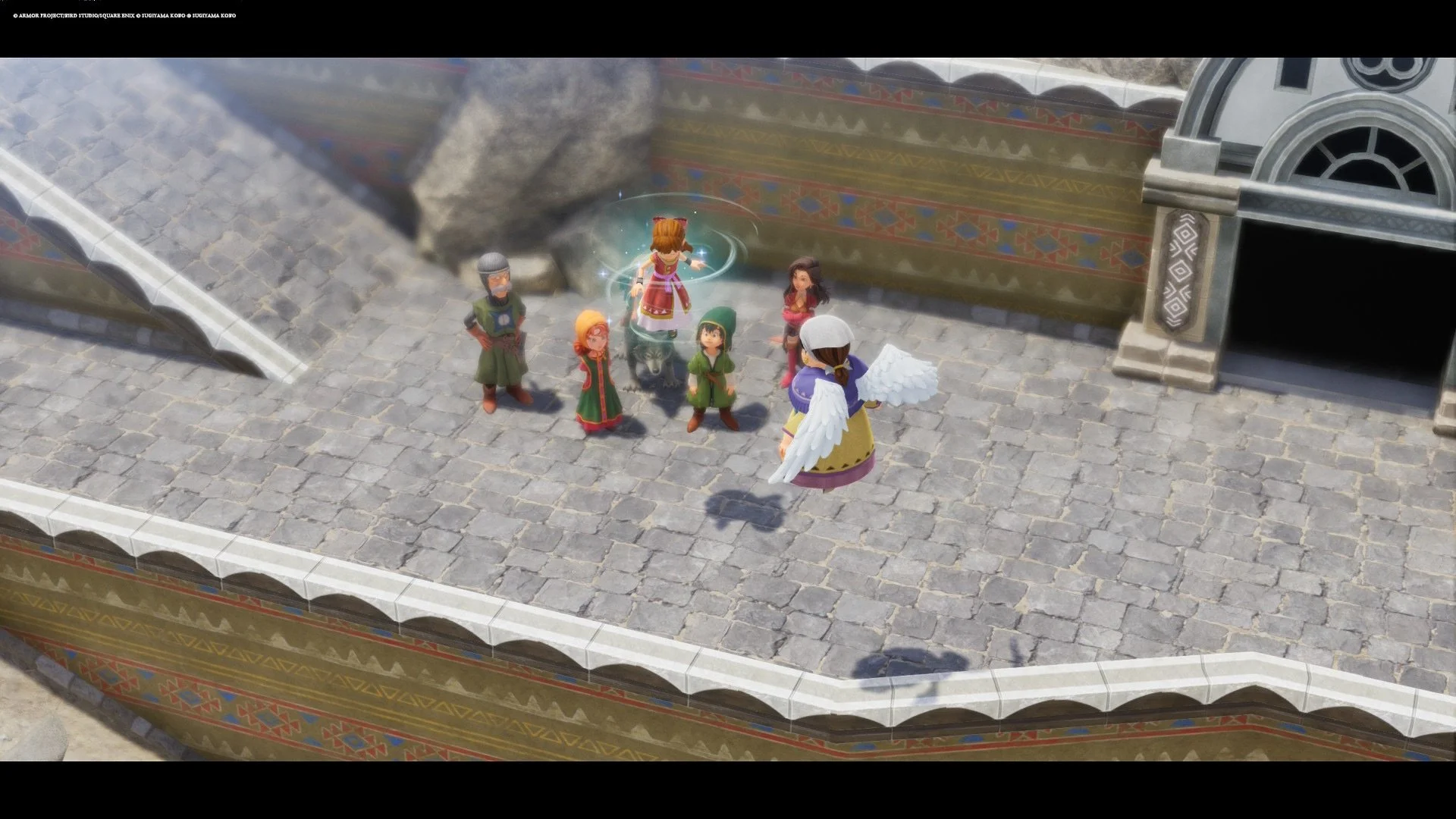
On the sound side of things, there is good and meh, let’s start with the good. When there is voice acting it is great, most of it anyway, as characters that speak all sound unique and have fun in their voice. I don’t know what it is about Mirabel’s voice, but I hate the Hermione Granger style voice and hearing her shout ‘easy-peasy’ after battles began to grate on my nerves quite quickly. The sound effects were ok, but they did make me think they were just modern recreations of the old 8-bit sounds and while it was ok, it was not the best and hearing the same sound each time you transition to a new area got old, fast. The meh thing was surprisingly the music, because there is very little of it, most battles use the same tracks and the lands only have a few and they repeat. The default mix was also a little loud for my liking, but adjusting that was easy enough.
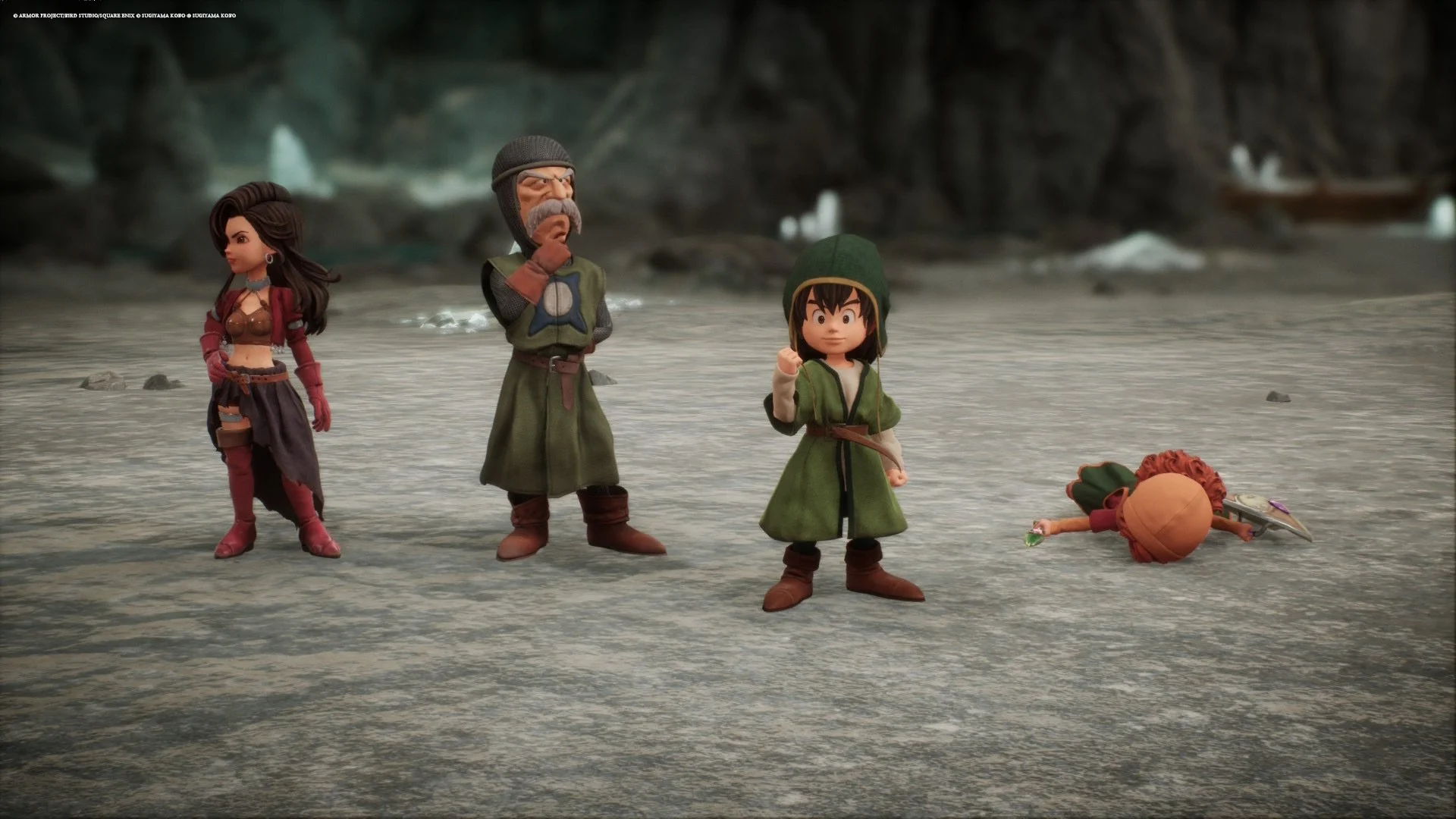
Dragon Quest VII Reimagined is a fine game, it takes a known adventure and updates it to the modern day and it does so semi-successfully. A lot of the game is just repeating the same action with each location and while some parts are slightly different, they are not different enough in my opinion. The combat is perhaps where things shine, once you can understand the games random nature with enemy attacks. Being able to set characters to be supporter or hitters is great and then having the game auto-battle, takes all the stress away from you. While the name features reimagined, they don’t stray too far from what was there originally and it feels like it’s a missed chance to do something new with a known story. Fans of the Dragon Quest series will enjoy this updated version of Dragon Quest VII and the accessibility updates will welcome in new players, but there is just not a lot of imagination in this release.
The Score
8.0
Review code provided by Square Enix
The Pros
The games updates to combat do make it far more open to players who have maybe been turned away from JRPGs in the past
Visually the game looks vibrant and delightful…
The Cons
… but the constant repetition of characters and lack of character customisation feels like they cheaped out
While it features Reimagined in the name, there is not a lot of changes to how things play out, which is a bit of a missed opportunity